Even in a crisis, feeding the most vulnerable
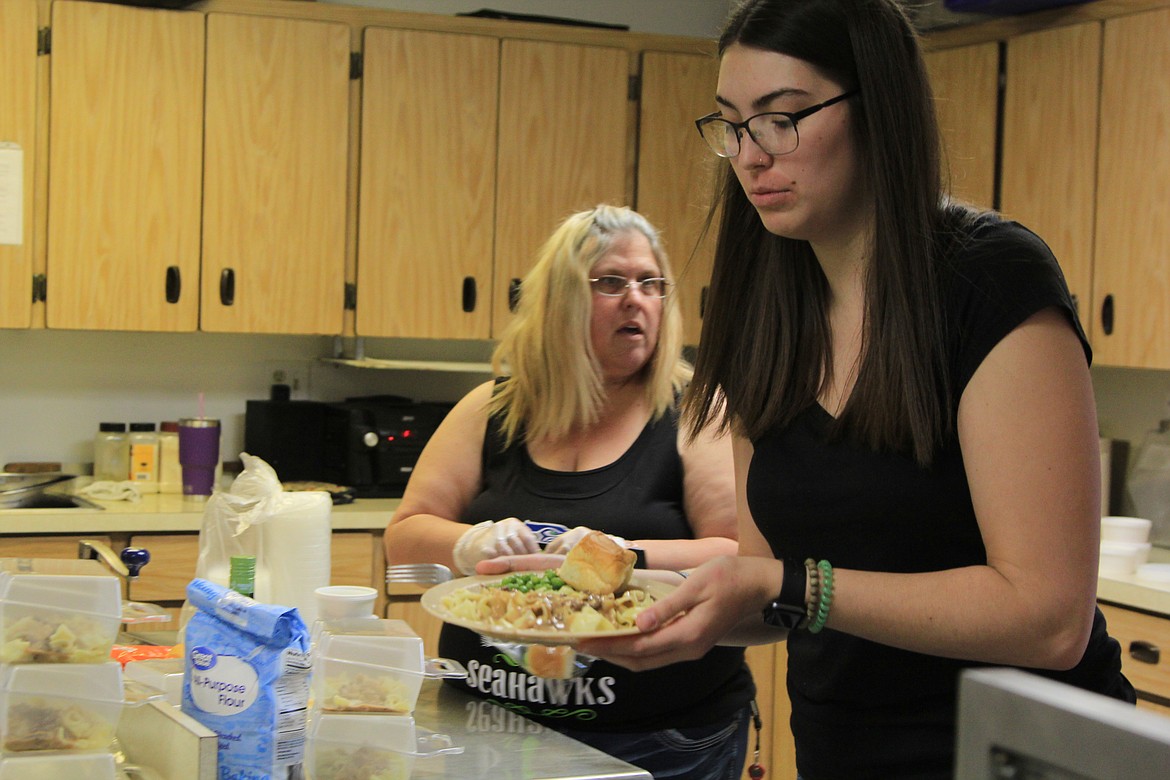
Corie Otto, left, and Cierra Hartman, right, prepare meals for area senior citizens.
Emry Dinman/Columbia Basin Herald
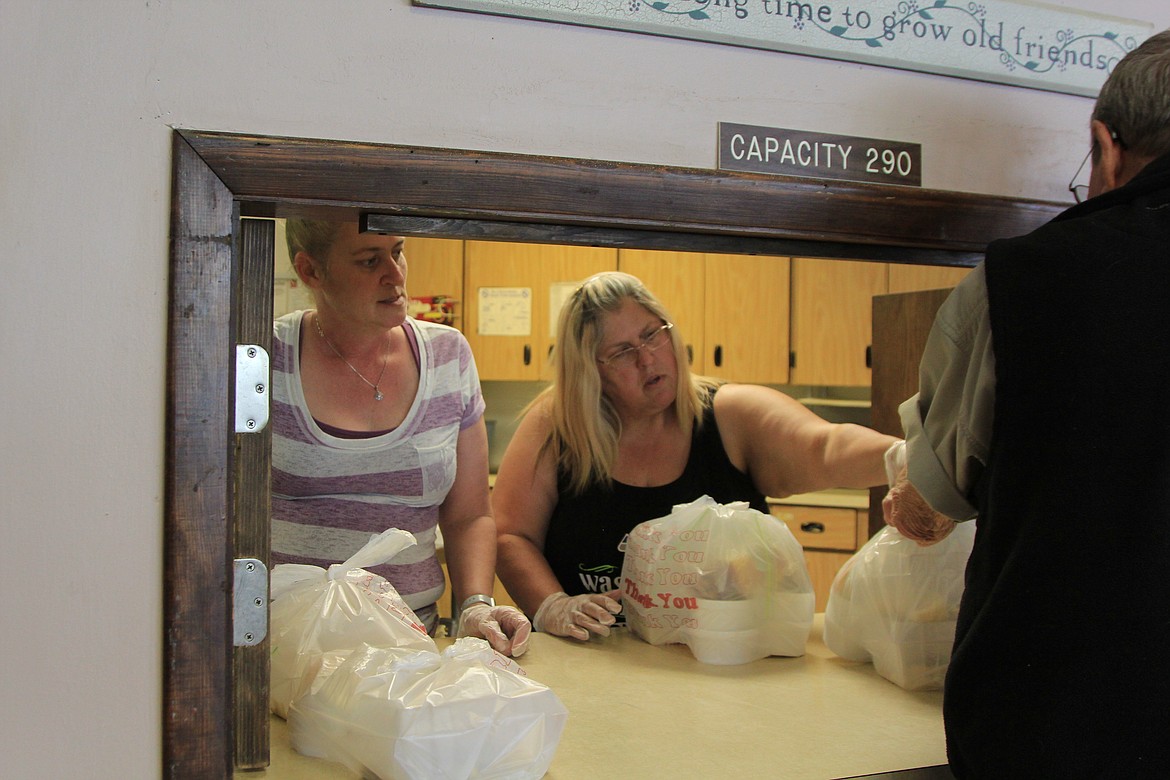
Marilyn Stewart, left, and Corie Otto, center, hand a bundle of meals to a man who has stepped quickly into the senior center for the pickup Thursday.
Emry Dinman/Columbia Basin Herald
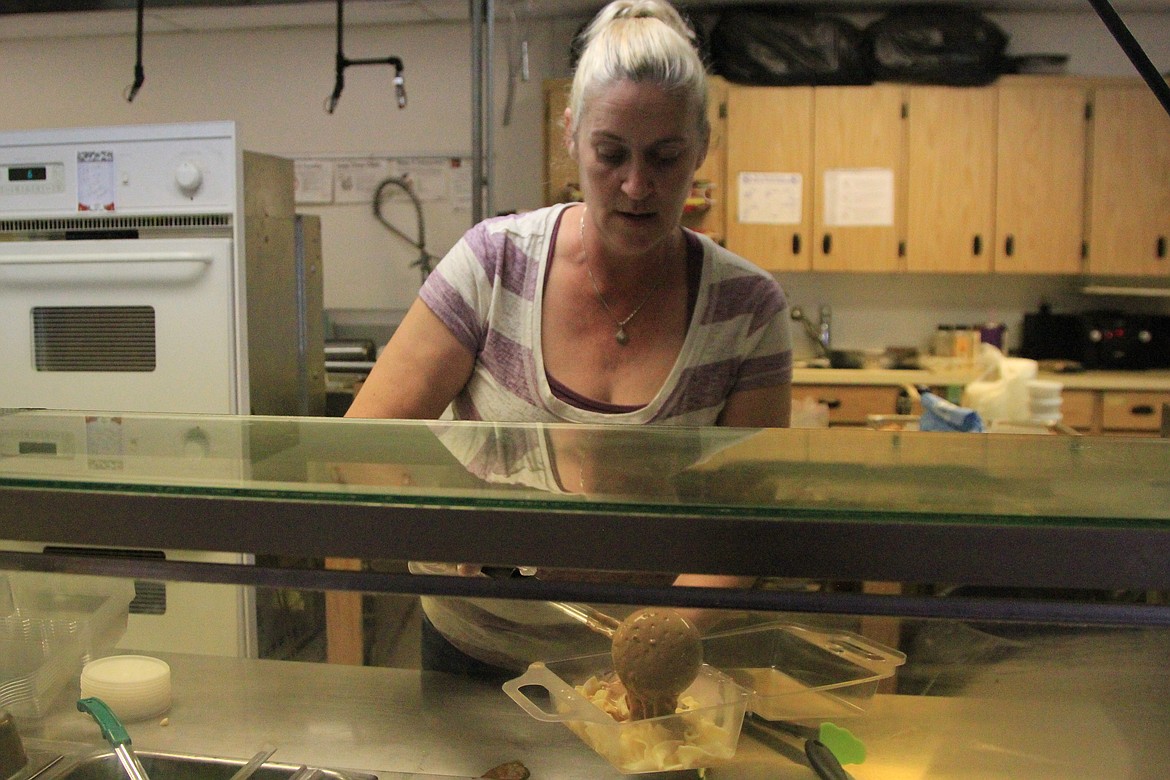
Senior center general manager Marilyn Stewart ladles beef stroganoff onto a bed of egg noodles.
Emry Dinman/Columbia Basin Herald
MOSES LAKE — Inside an otherwise empty Moses Lake Senior Center on a warm Thursday morning in April, three women portion out beef stroganoff, peas, dinner rolls, cookies and some fruit into hundreds of disposable containers.
From there, the food will be packaged in six- or 14-day bundles and stored in freezers before being delivered to over 100 of the region’s most vulnerable as part of the local “meals on wheels” program.
For many homebound adults over the age of 60 in Othello, Warden, Soap Lake, Ephrata, Quincy and Moses Lake, they’re making lunch. Participating Moses Lake residents get one hot meal and six frozen meals delivered weekly, enough to give them a meal each day; residents in other cities get 14 frozen meals delivered biweekly,
While the senior center and adjacent thrift store have closed their doors to the public during the pandemic, the office and kitchen manager, Corie Otto, general manager Marilyn Stewart and clerk Cierra Hartman are still making sure the county’s elderly have at least one nutritious meal a day. While much of the rest of the country shelters at home, these three continue venturing out to the center each day knowing they’re needed.
“They rely on us to feed them,” Hartman said.
“They are the most vulnerable to this virus, and we need to be able to be sure that they can have food,” Otto added.
The work hasn’t always been easy. And there have been some challenges, whether it be the freezer that ran out of refrigerant during a less-than-optimal time to call the repairman, or the 15-passenger bus that used to take seniors on field trips but which was vandalized almost two weeks ago.
Then of course there’s the issue of money. Much of the program’s funding comes from Aging and Adult Services of Central Washington, which contracts with the state Department of Social and Health Services. Some funding comes from client donations — the program asks recipients for a suggested donation of $4.50 per meal, though it won’t cut off food deliveries to those who don’t pay.
But with both the senior center and the thrift store closed, other revenue streams, particularly the ones that help the organization make payroll, have dried up, Stewart said.
Without the lunch rush the senior center normally sees, serving anywhere from 30 to more than 100 people a day, the senior center has been diverting its regular food donations from Walmart and Winco to the local food bank.
The senior center has been relying largely on food already in its freezers to supply the food delivery program.
When they need to restock, they’re turning to food distributor US Foods to order supplies. But facing reduced revenue, the organization is asking for cash donations and donations of food — fruits and vegetables especially.
The program has been active in Grant County for decades, and the women packing food for area seniors want to make sure the meals don’t stop coming to those who need them. Soon, they hope to be able to share a space with them again.
“The most challenging part right now is not being able to see that our seniors are OK,” Stewart said. “It’s quite sad in that building without them.”
Emry Dinman can be reached via email at [email protected].