
Area farmers playing a waiting game
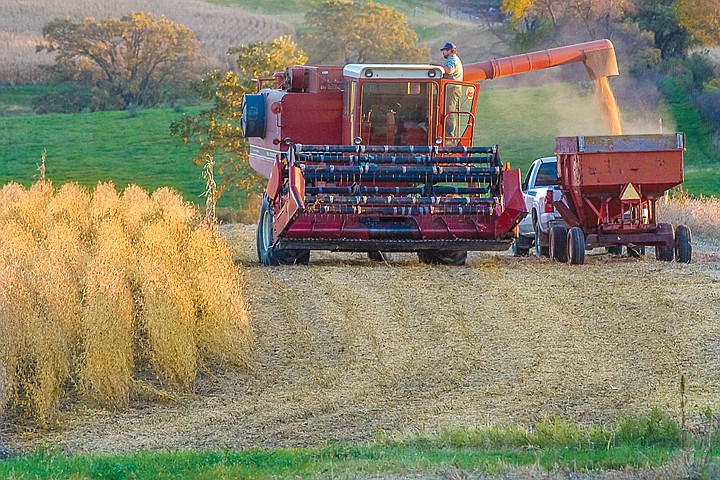
Waiting Game
(MCT) PULLMAN - It's business as usual for local farmers, at least for the time being, as they wait for the other Washington to figure out what the recently passed farm bill actually means for them.
"They're eager to know how programs are going to look and what's going to be working for them," said Tory Bye at a meeting of the Pullman League of Women Voters on Monday of the concerns local farmers have expressed to him regarding the changes the bill will have on their livelihood.
Bye, director of the Whitman County Farm Service Agency, admits he's limited in what he can say, mainly because there's still a great deal to be determined about what the new programs being created by the bill will actually do.
It has many growers frustrated - those programs could affect their planting decisions, and spring is fast approaching.
"A lot of that concern comes from how those programs might affect what they're going to plant, so they're anxious to get some information so they can make knowledgeable planting decisions," Bye said.
The most significant change in the new bill for farmers is the elimination of direct payments and counter-cyclical payments, a program long criticized for paying farmers not to farm.
Those payments, Bye said, made up about two-thirds of the payments in Whitman County.
"As you can see, it's not really a small deal in the county where we probably issued close to $680 million (in total payments) between 1995 and 2011," Bye said.
Replacing those direct payments, it appears, will be some kind of farm insurance program, but what that actually means is as-yet undetermined.
The new five-year farm bill, signed into law by President Barack Obama in February, was the topic of a panel discussion at the Gladish Community Center hosted by the League of Women Voters.
Questionnaires were handed out during the event as part of a national movement by the organization to develop an overall national stance.
"We use this to build a consensus and ultimately build a national position to lobby," said Joan Folwell, treasurer for the local league chapter.
"I heard an economist say that, 'Yeah, it's 900-something pages, but that's just the farm bill.' That doesn't include the amendments that go along with it. That brings it up to about 2,000 pages," said Ben Barstow, a Palouse farmer, summing up the reason for the delay in determining details on the bill.
Further complicating the issue, agricultural activity only takes up a small portion of the overall cost for the legislation - about 21 percent - with the rest going toward nutrition programs, like food stamps.
"We have a long way to go before any of us, especially here in Whitman County, have any idea about what this farm bill is actually going to mean," he said.
While Barstow did admit he likely wouldn't still be in farming business himself if it weren't for the direct payment system some time ago when he had a difficult year, he also said the past few years have, generally, been great for farmers, and suggested it might be time to start moving toward a more free-market system, with fewer government subsidies.
Joe Guenthner, a former University of Idaho Agricultural Economics professor, said he was all for a free-market system. Without it, he said, there is inevitable discrimination among commodities.
Guenthner said the reason different commodities get different subsidies is because acreage equals power.
"There's 100 million acres in the U.S. planted to corn. There's 1 million of planted potatoes," he said. "So who has more political power? The corn growers. And who has the bigger impact on the farm bill? The corn growers."
Become a Subscriber!
You have read all of your free articles this month. Select a plan below to start your subscription today.
Already a subscriber? Login

